Exhibit writer
You need a welcome that feels personal without obscuring dates, names, or directions.
Test a short introduction for warmth and intelligibility before expanding the script.
Voice prompt ideas
A voice brief works best when it describes a person, a scene, and the way a line should feel. Use these ai voice design prompts as starting points, then listen and revise rather than treating any example as a guaranteed result.
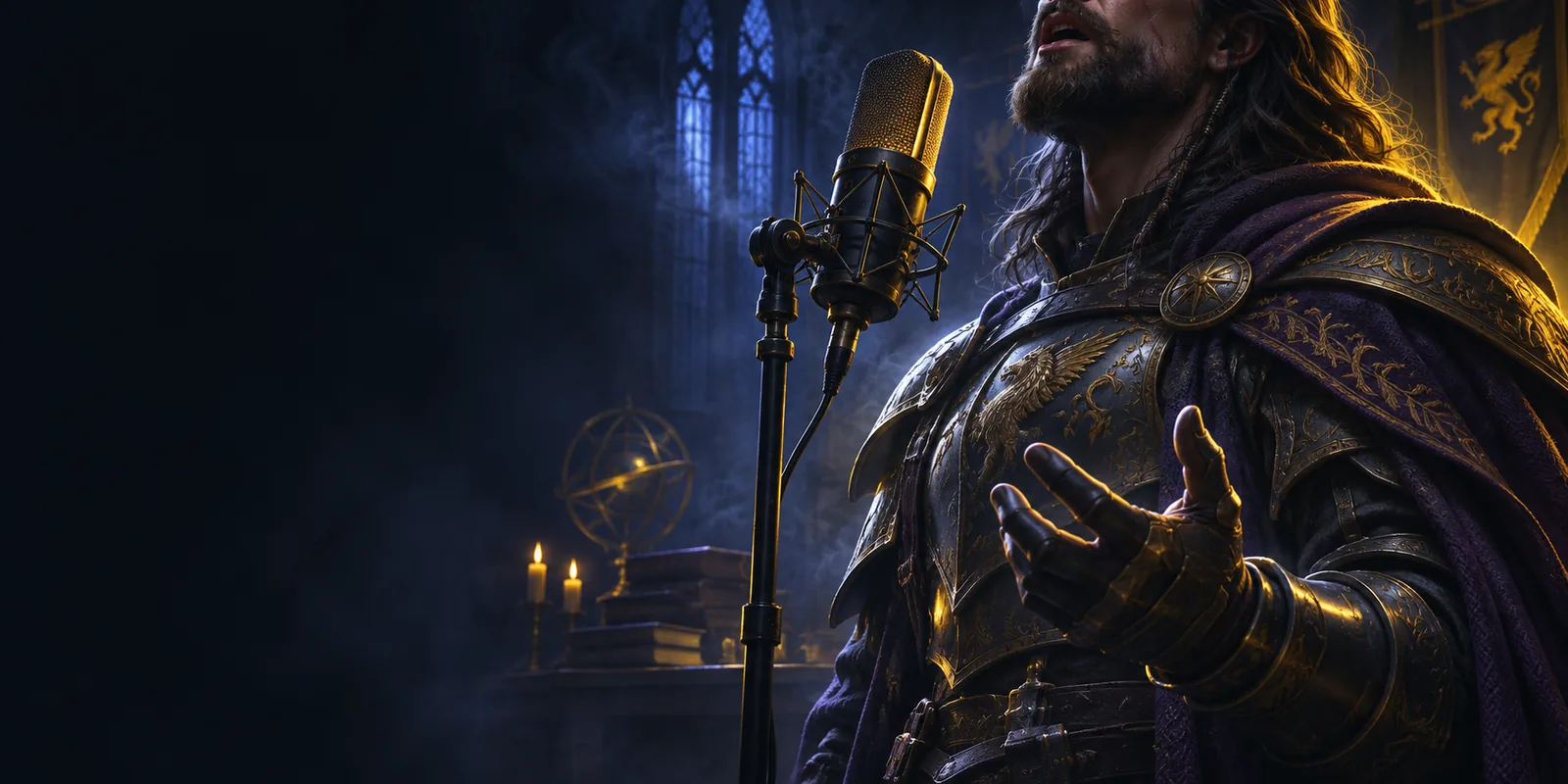
A request such as “make a friendly voice” leaves too much open: friendly to whom, in what setting, and for what kind of line? These related guides help narrow the brief.
Even detailed ai voice design examples are briefs, not promises about sound, availability, or usage rights.
The same description can produce different interpretations, and this page cannot preview or guarantee a particular voice.
What to do instead
Test a short line and revise one quality at a time.
A prompt being free to read does not establish that the destination offers free generation, downloads, or commercial use.
What to do instead
Read the destination's current access and license terms.
A character description does not grant permission to imitate an identifiable person's voice.
What to do instead
Create an original character or obtain appropriate permission.
Choose the job first, then write a brief that gives you something specific to evaluate. These workflows describe a way to test ideas, not guaranteed product controls.
For a museum welcome, describe a warm, steady guide with clear consonants and gentle curiosity. Add a short welcome line; listen for whether the delivery invites visitors in without sounding like an advertisement.
For a bedtime story, describe a calm, unhurried narrator speaking to a child. Keep the line short and compare pacing and softness with the museum version. Avoid assuming that “lower” or “higher” alone defines the character.
For a game quest giver, ask for a measured, weathered voice with restrained urgency. Try one instruction and one emotional line, then revise the brief if either becomes theatrical or hard to understand.
This comparison is a writing aid for ai voice design, not a specification for voices available at the destination.
| Vague request | Scene-ready brief | |
|---|---|---|
| Museum guide | A friendly voice | A warm guide welcoming visitors to a night exhibit |
| Story narrator | A soft voice | A calm narrator reading one bedtime paragraph to a child |
| Quest giver | An epic voice | A weathered guide giving a clear warning with restrained urgency |
| Pace | Unspecified | Conversational, unhurried, or measured for the scene |
| Test line | No words provided | One short line suited to the intended audience |
| Revision cue | “Try again” | Identify one issue, such as rushed pacing or unclear words |
The strongest ai voice design example describes what a listener needs, not merely what the voice should sound like.
You need a welcome that feels personal without obscuring dates, names, or directions.
Test a short introduction for warmth and intelligibility before expanding the script.
You want distinct characters but do not want to imitate a known performer.
Separate roles through attitude, pacing, and context rather than a celebrity reference.
You need a reassuring narrator for instructions that must remain easy to follow.
Compare a sample instruction at two levels of urgency before choosing a direction.
Use the pair as a visual reminder of the revision process: a broad idea becomes a more useful brief when the listener, scene, and delivery are named.
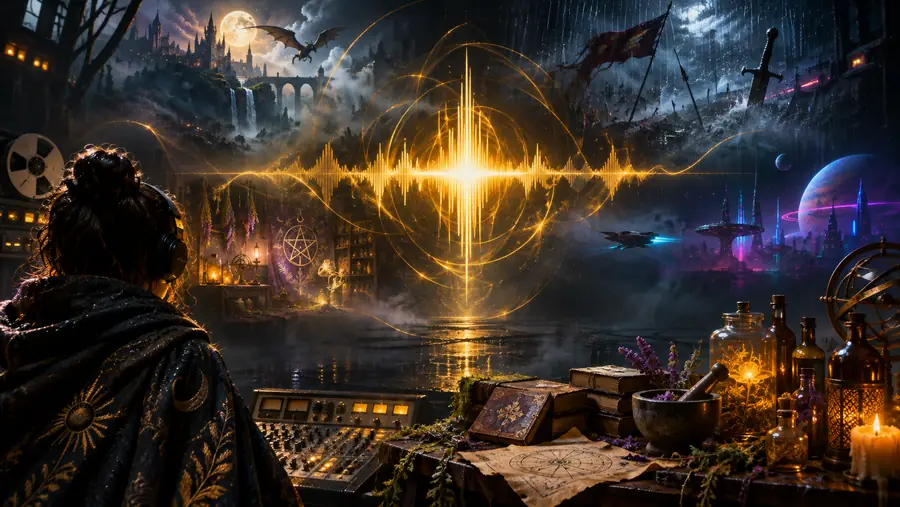
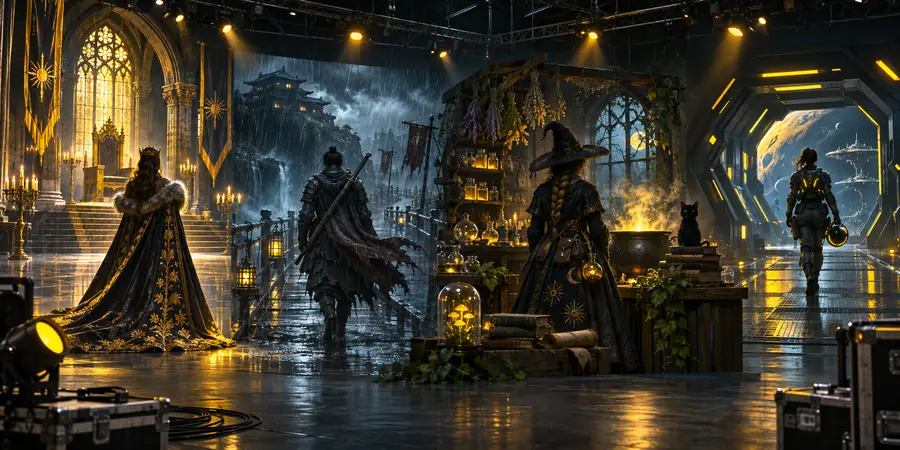
These images illustrate the comparison; they are not audio samples or verified outputs from the destination. Judge any generated voice by listening to your own test line.
Broad ideaScene-ready briefBefore using a result publicly, check the destination's current terms for access, downloads, and permitted uses. Avoid prompts that identify a real person without authorization, and confirm that any script or recording you provide is yours to use. The examples here are free to read; generation terms may differ.
The museum guide, bedtime narrator, and quest giver briefs on this page are free to read and adapt. They are writing examples, not downloadable voice samples; check the destination for its current generation and usage terms.
You can adapt a brief to your video's audience and test it with a short line. Whether you may publish or monetize the resulting audio depends on the destination's current terms and your rights to the script.
It names a scene, listener, and delivery style, giving you specific qualities to listen for. A detailed brief still cannot guarantee an exact sound, so revise it after hearing a result.
No. Reading or copying an example prompt costs nothing here, but that says nothing about generation limits, downloads, or licensing at another service. Check those conditions before starting a project.