Creative director
You have a character brief with age, energy, accent, and emotional intent, but no finished voice reference.
A design-first workflow helps turn those descriptors into a focused voice concept before production expands.
Comparison guide
If you are comparing elevenlabs with Aivoicedesign, start with the job you need done rather than the brand name. One path may suit an established production workflow, while the other is focused on shaping a voice from a clear creative brief.
The verdict
Choose the platform that matches your starting point: an existing voice workflow, or a fresh voice concept that needs direction. This comparison separates those decisions without treating one tool as best for everyone.
Fit by role
The strongest choice depends on your role, your source material, and how much creative direction you want before producing spoken audio.
You have a character brief with age, energy, accent, and emotional intent, but no finished voice reference.
A design-first workflow helps turn those descriptors into a focused voice concept before production expands.
You already manage recordings, scripts, revisions, and delivery requirements across several projects.
A mature production platform may fit better when repeatability and an established audio workflow matter more than initial ideation.
You need distinct voices for characters and want to test whether each one feels right in context.
Voice design lets you compare character direction early, before committing every line to a final performance.
You want a repeatable way to brief a voice for explainers, short videos, or narrated educational material.
A clear prompt and review loop can reduce vague feedback such as “make it warmer” or “sound more confident.”
Migration path
A fair comparison takes a shared brief, a small sample, and explicit review criteria. Follow the same three steps for both tools so the result reflects your needs rather than your first impression.
Describe the speaker, audience, tone, pacing, emotional range, and intended use in plain language. Avoid naming a platform in the brief.
Use one passage that includes a sentence, a question, a pause, and a change in emphasis. Keep the wording and review conditions consistent.
Compare intelligibility, character fit, direction control, revision effort, and how easily the result can move into your existing production process.
Dimension by dimension
The table below is a planning aid, not a claim that one service wins every category. Verify current capabilities and terms in the product you intend to use before committing to a production workflow.
| Aivoicedesign | ElevenLabs | |
|---|---|---|
| Starting point | A written description of the voice and the intended character or use | An established voice-generation workflow and its available creation options |
| Best early question | What should this voice sound like? | How can this voice fit an existing production process? |
| Creative brief fit | Strong fit when traits, mood, role, and audience need to be defined first | Strong fit when the user already knows the desired output and workflow |
| Evaluation style | Review the concept against a brief before scaling into many lines | Review generated speech inside a more established voice-production context |
| Workflow emphasis | Concept development and guided voice direction | Production-oriented voice generation and repeat use |
| Learning curve | Starts with descriptive language and a focused creative prompt | May feel more natural to users already familiar with voice tools |
| Best comparison method | Test whether the output matches the brief and character intent | Test whether the output fits your scripts, revisions, and delivery routine |
| When to look elsewhere | When your needs depend on a specialized production feature not covered in the brief | When you want to begin with voice concepting rather than an established workflow |
Honest caveats
A landing page comparison can clarify the decision, but it cannot replace a controlled test with your own script, audience, and delivery requirements.
Words such as warm, cinematic, natural, or authoritative are interpreted differently by different teams.
What to do instead
Use a shared brief and judge a short sample against specific traits and audience needs.
Features, usage terms, supported controls, and output policies can change after this page is published.
What to do instead
Check the current product documentation and account terms before building a dependent workflow.
A voice that sounds right in one sentence may behave differently with names, numbers, questions, or emotional shifts.
What to do instead
Include the hardest lines from your real script in the comparison sample.
A technically suitable voice may still require careful review of consent, licensing, impersonation, and audience expectations.
What to do instead
Document the source, intended use, approvals, and disclosure requirements for each project.
Site context
These figures describe the Aivoicedesign site structure, not a performance promise. They show the range of routes available for researching voice design before choosing a workflow.
Same brief, clearer review
A useful test changes the question from “Which brand is better?” to “Which result best matches the brief I wrote?” Use the same source text and review criteria for both sides.
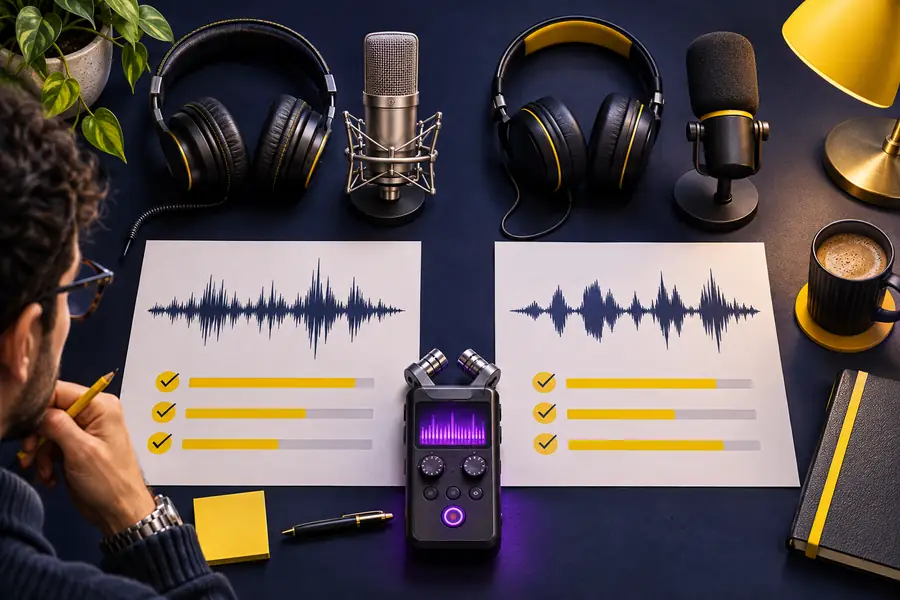

The visual is a review aid, not a claim of identical output.
Unfocused comparisonBrief-led decisionTake the next step
Aivoicedesign gives you a focused place to begin with the character, tone, and intended use you want to test. Bring one short script, compare the result against your brief, and decide from evidence that matches your project.
Comparison FAQ
These answers keep the comparison focused on the decision behind the search, rather than assuming one platform suits every voice project.
Aivoicedesign can be considered an alternative when your main need is to define and test a voice concept from a written brief. The right choice depends on whether you are starting with creative direction or fitting voice generation into an existing production workflow.
A description-first workflow is usually the more direct fit when you know the speaker traits, mood, role, and audience but do not have a finished reference. Test the same brief in both tools if the decision affects a larger project.
Yes, if you use the same short script, voice brief, review criteria, and intended audience for both. Compare intelligibility, character fit, control, revision effort, and how easily the result fits your delivery process.
Switch only when the current workflow is not serving the job you need to do, such as shaping a new character concept or clarifying voice direction. Run a small side-by-side test before moving an entire project.
Check the voice brief, script types, revision process, rights and consent requirements, output needs, and current product terms. A short test using your real constraints is more useful than choosing from feature labels alone.